Mold Inspection in Toronto
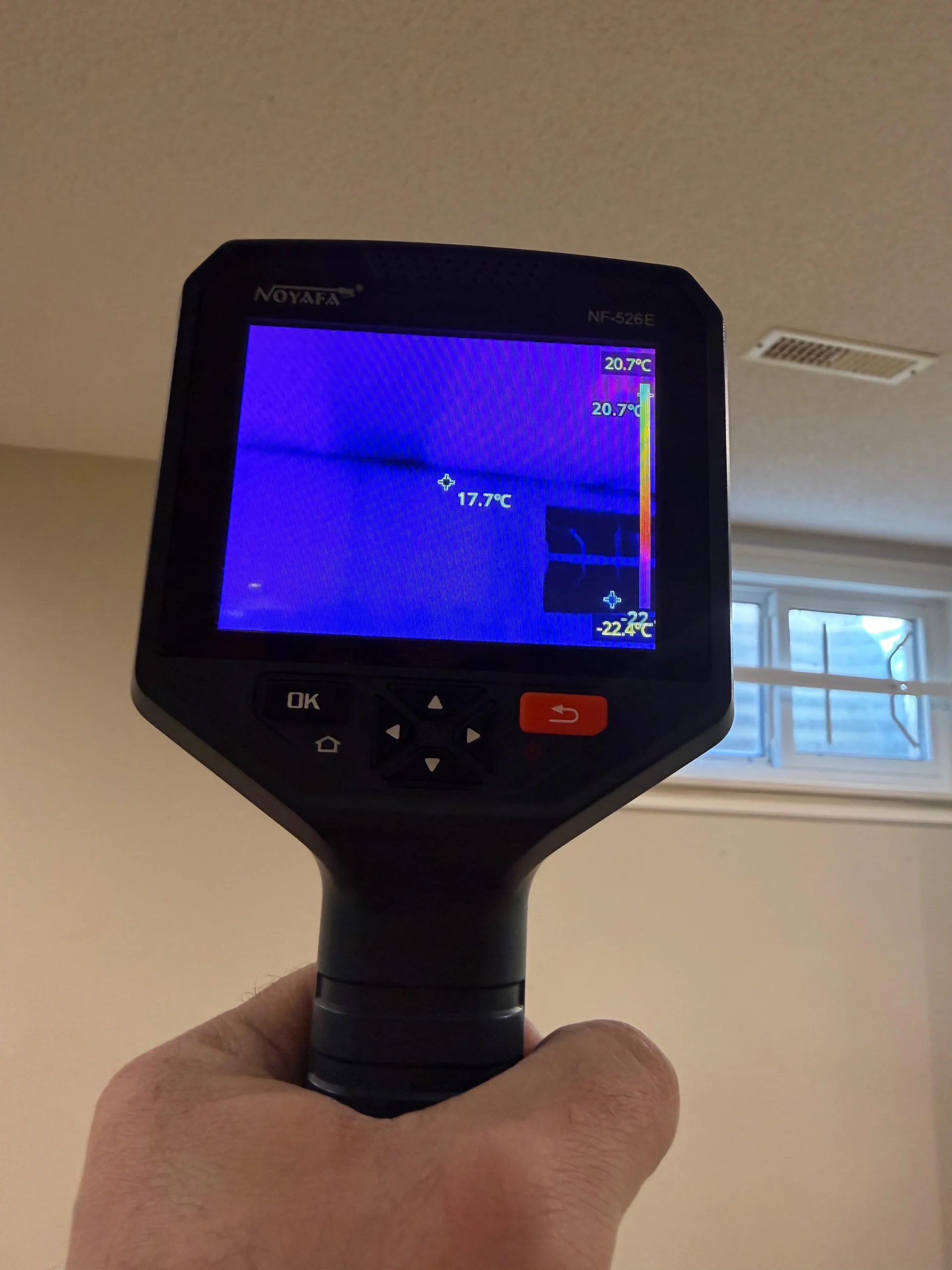
A mold inspection in Toronto answers four questions in order: is there active moisture anywhere in the home, where is it coming from, what materials are affected, and how widespread is the contamination. Family-owned since 2013, we keep every stage in-house: IICRC-certified technicians, our own licensed plumber, no subcontractors, and we bill your insurer directly. We combine visual assessment, moisture meter readings, thermal imaging, and humidity logging - because single-technique inspections miss things, especially in the older housing stock that dominates Toronto.
On-site within 60 minutes, 24/7.
What We Look For in Toronto Homes
Every mold inspection adapts to the housing type, because what we are looking for in a 1905 Cabbagetown semi is very different from what we are looking for in a 2019 Liberty Village condo. The framework is the same - find the moisture, find the mold, identify the source - but the specific things we check across Toronto housing stock differ by vintage.
Pre-1950 Toronto House Inspection
On older Toronto houses - Cabbagetown, Riverdale, Leslieville, Parkdale, Roncesvalles, the Junction, the Annex, Trinity-Bellwoods, Little Italy, Yorkville - we focus on:
- Stone and brick foundation condition - rising damp, efflorescence, visible water staining, deteriorated pointing
- Finished basement wall cavities - moisture meter readings on drywall, thermal imaging for hidden wet spots behind paneling
- Plaster walls at bathrooms and kitchens - long-term slow leaks behind original plaster often produce hidden mold invisible until the wall is opened
- Complex rooflines - valleys, parapets, dormers, bay windows; each is a potential failure point
- Attic spaces - ventilation adequacy, bathroom fan termination, roof sheathing staining
Postwar and Mid-Century Toronto House Inspection
East York, North Toronto, Forest Hill, Davisville, and parts of Etobicoke have extensive 1945-1975 housing. Inspection priorities:
- Basement finishing over uninsulated concrete - 1970s-80s rec rooms are frequent mold zones hidden behind panelling, and the most common scope conversion from inspection to mold remediation in Toronto
- Attic ventilation - bathroom fans often vented into the attic, especially in homes where upstairs bathrooms were added after original construction
- Original windows and flashing - aluminum sliders from the 1960s often have failed weather sealing
- Concrete block foundation condition - cracks, efflorescence, wall cavity moisture
- Kitchen and bathroom plumbing - original supply lines and drain assemblies in walls
Toronto Condo Inspection
For condo units - mostly along Yonge, King-Spadina, Queens Quay, City Place, and the dense downtown corridors - we focus on:
- Bathroom exhaust capacity and ducting integrity - often the source of bathroom ceiling mold
- Bedroom exterior walls and corners - thermal bridging behind furniture is the common condo mold zone
- Window and balcony door threshold condition - aging caulking and gasket failure
- HVAC system - fan coil unit condition, condensate drain, return plenum inspection
- Ceiling stains - indicating upstairs unit water events; source identification matters for insurance
Our Inspection Deliverable
Every inspection produces a written report that includes:
- Photo-documented findings, indexed by location
- Moisture map of any wet areas with meter readings
- Thermal imaging documentation of hidden moisture
- Humidity and HVAC findings
- Written scope recommendation if remediation is needed, with cost estimate
Serving Toronto & Surrounding Areas
24/7 response across the GTA.
Mold Inspection Emergency in Toronto?
Available 24/7 - on-site within 60 minutes.
Mold Inspection in Toronto - FAQ
Suspect Mold in Your Toronto Home?
Professional inspection with moisture mapping and thermal imaging. Written report with findings and recommended scope.