Serving North York · IICRC Certified
Mold Removal in North York
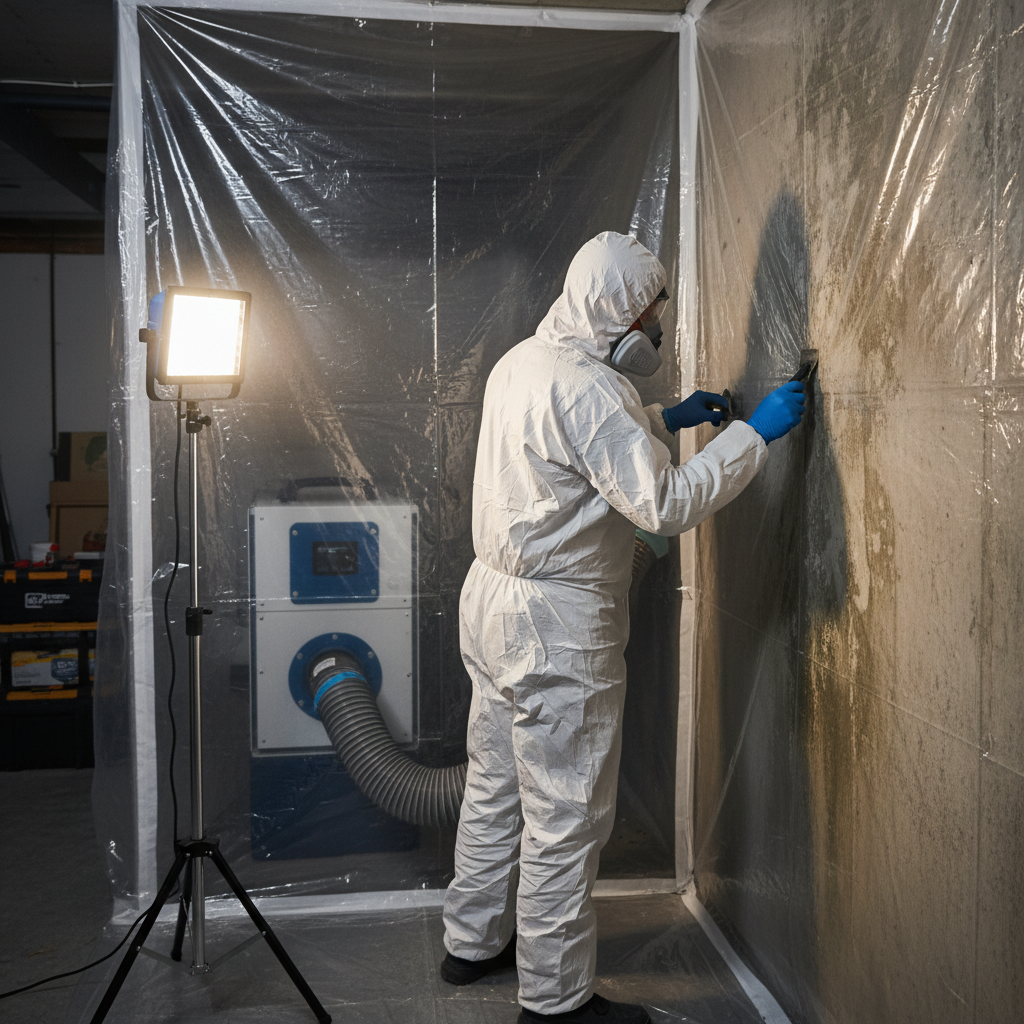
We handle mold remediation across North York — attic mold in Don Mills and Willowdale bungalows, basement mold in 1970s finished rec rooms, and condo mold in Yonge-Sheppard-Finch towers. The North York housing mix produces three distinct mold patterns that each need a different approach. We apply IICRC S520 protocol with full containment on every job.
Dispatched from 85 Ellesmere Rd in Scarborough — 30-45 minute response to North York.
Three Distinct Mold Patterns Across North York
North York is one of the more architecturally varied parts of the GTA, and the mold patterns split into three clear categories based on housing type.
1. Attic Mold in 1950s-70s Bungalows and Splits
This is the single most common mold call we get in North York. Don Mills, Willowdale, Bayview Village, Lansing-Westgate, and Lawrence Manor were built during the postwar expansion with a housing typology that looks great from the curb but has a persistent ventilation weakness. The attics on these homes were built with minimal soffit and ridge ventilation by modern standards. When later renovations added bathroom exhaust fans, many were vented up into the attic rather than through the roof. The first owner who added a tiled bathroom on the second floor often trapped moisture in the attic for the next 40 years.
The result: black discoloration on the roof sheathing, visible when you look up at the plywood from inside the attic. On severe cases, the plywood itself is spongy and delaminating. This is almost always Cladosporium and Aspergillus/Penicillium, sometimes with Stachybotrys where chronic moisture has accumulated. The remediation involves cleaning or sanding the sheathing, antimicrobial treatment, and — critically — fixing the ventilation so the mold does not come back.
2. Basement Mold in 1970s-80s Finished Rec Rooms
Many North York basements were finished during the 1970s-80s renovation wave, often with wood paneling directly over uninsulated concrete or concrete block, and with no vapor barrier. Over 30-40 years, moisture from the foundation migrates into the wall assembly, the back of the paneling and framing gets wet, and mold grows inside the cavity. The homeowner often has no visible indicator until the room starts to smell musty or until someone removes a panel.
We see this in Bayview Woods, parts of Willowdale, Henry Farm, and the quieter streets of Don Mills. The remediation almost always requires removing the paneling, the framing behind it, and the insulation (if any), then treating the concrete foundation surface and installing proper moisture separation before rebuilding.
3. Condo Mold in Yonge-Sheppard-Finch Towers
Condo mold has a completely different pattern: it is almost always on bedroom exterior walls (especially at corners) and on bathroom ceilings. Bedroom mold comes from thermal bridging — the concrete structural element transmits cold from outside, condensation forms where the cold wall meets warmer indoor air, and any furniture placed against that wall restricts air movement and traps humidity. Bathroom ceiling mold is almost always from undersized or disconnected exhaust fans combined with high shower-steam humidity.
For condo jobs we work with the unit owner and often coordinate with building management. The unit-level remediation (cleaning, antimicrobial treatment, paint) is usually straightforward. The underlying thermal bridging fix often requires building-level cooperation and may not be achievable without adding interior insulation — we advise the unit owner on options.
North York Neighborhoods We Cover
- Willowdale — heavy 1960s bungalow stock, frequent attic mold jobs
- Don Mills — original 1950s community, classic attic ventilation issues
- Bayview Village, Henry Farm — 1970s-80s finished basements, basement mold in wall cavities
- Lansing-Westgate, Newtonbrook — mix of older bungalows and newer infill, varied mold patterns
- Lawrence Manor, Armour Heights — larger older homes, often complex mold in multiple areas
- Bathurst Manor, Clanton Park — 1960s-70s splits, attic and basement issues
- Hillcrest Village, Bayview Woods — 1970s builds with basement moisture patterns
- Downsview, York University area — mixed housing stock and student rentals with HVAC and ventilation issues
- Yonge-Sheppard and Finch condo corridor — high-rise units with thermal bridging mold patterns
Our North York Remediation Process
Regardless of which mold pattern we are addressing, our approach follows IICRC S520 standard:
- Visual assessment, moisture readings, thermal imaging, and source identification
- Containment setup with 6-mil poly and HEPA-filtered negative air pressure
- Physical removal of contaminated porous materials
- HEPA vacuuming and antimicrobial treatment of remaining structural surfaces
- Moisture source correction — this is non-negotiable; we do not remediate without it
- Post-remediation verification (third-party clearance available on request)
- Reconstruction matching original finishes
For attic remediation jobs in Don Mills and Willowdale, the ventilation correction often involves installing proper soffit baffles, relocating bathroom exhaust ducts to terminate through the roof, and sometimes adding ridge vents or gable vents depending on the roof design. Health Canada guidance is clear that moisture control is the single most important factor in preventing mold recurrence.
Serving North York & Surrounding Areas
Based at 85 Ellesmere Rd, Scarborough — 24/7 response across the GTA.
Mold Removal Emergency in North York?
Available 24/7 — on-site within 45 minutes.
Other Restoration Services in North York
Mold Removal in Other GTA Locations
FAQ
Mold Removal in North York — FAQ
North York Mold Problem? Get It Assessed Properly.
IICRC S520 certified remediation with moisture source correction. Free on-site assessment.