Serving Toronto · IICRC Certified
Mold Removal in Toronto
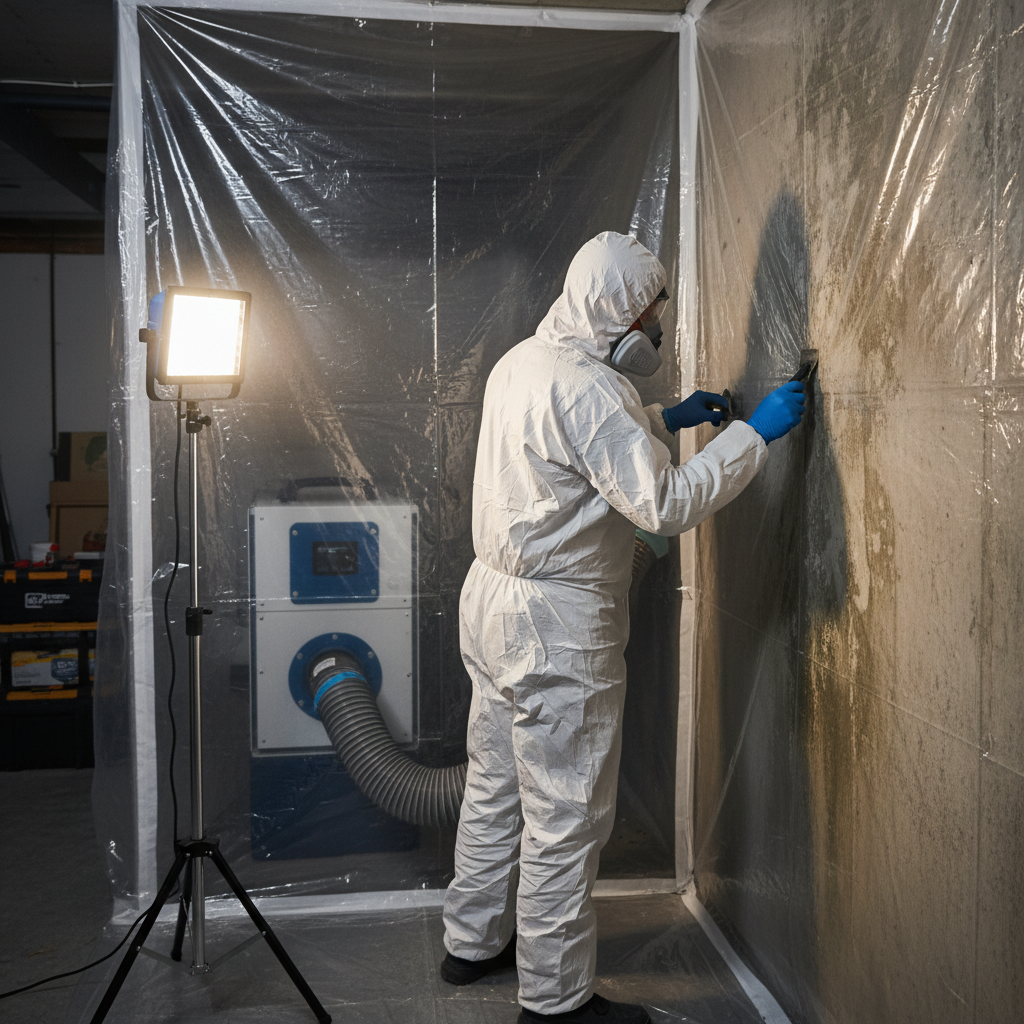
Toronto's housing age range is the widest in Canada — from 1880 Cabbagetown row houses to last-year condo towers — and the mold patterns differ dramatically across that range. We handle remediation in all of it, applying IICRC S520 protocol with full containment, HEPA-filtered negative air, and moisture source correction on every job.
Dispatched from 85 Ellesmere Rd in Scarborough — 25-70 minute response across Toronto.
Toronto Mold Is Not One Problem
A mold job in a 1910 Cabbagetown row house looks nothing like a mold job in a 2015 Liberty Village condo. The contamination patterns, the substrates, the moisture sources, and even the accessibility of the affected areas are different. We scope each job to the specifics of the building.
Pre-1950 Downtown and Inner Toronto Houses
The Victorian, Edwardian, and early-20th-century housing stock that dominates Cabbagetown, Riverdale, Leslieville, Parkdale, Roncesvalles, the Junction, Trinity-Bellwoods, the Annex, Yorkville, and the near-downtown neighborhoods presents specific mold challenges:
- Rising damp in stone and brick foundations — many pre-1930 foundations have no effective moisture barrier. Chronic basement dampness supports mold at the base of walls and in any finished basement construction.
- Plaster wall cavities from long-term leaks — pre-war houses often have horsehair plaster walls over wood lath. Years of slow leaks behind plaster produce hidden mold that is invisible until the wall is opened.
- Complex roofline mold — Victorian rooflines with valleys, dormers, bay windows, and parapets have many failure points. Water that enters at the roof travels along framing and can produce mold meters from the entry point.
- Attic mold from inadequate ventilation — original attic spaces often have minimal ventilation and condense shower and cooking moisture on the roof sheathing during winter
- Basement mold from flooding history — many older Toronto basements have flooded multiple times over the building's life; incomplete remediation leaves mold behind each time
Postwar and Mid-Century Toronto Houses
East York, North Toronto, Forest Hill flats, Davisville, and Etobicoke contain extensive 1945-1970 housing with their own mold patterns:
- Basement rec-room mold from 1970s-80s finishing over uninsulated concrete with no vapor barrier
- Attic mold from bathroom fans vented into the attic — common in homes where second-floor bathrooms were added after original construction
- Ice dam-related wall mold on north-facing walls with inadequate attic insulation
- Original kitchen and bathroom supply-line slow leaks that have been running undetected for years
Toronto Condos
The Toronto condo stock — from 1980s towers to brand-new developments — has a consistent mold profile:
- Bathroom ceiling mold from undersized or disconnected exhaust fans
- Bedroom exterior-wall mold at corners from thermal bridging: the concrete structural elements transmit cold, condensation forms against them, and any furniture placed there traps humidity
- Balcony threshold and window leak mold in older buildings with failing gaskets and caulking
- Cross-unit damage from neighbor water events — upstairs leaks cause downstream mold on ceilings and upper walls
- HVAC condensate line leak mold especially in fan-coil units
Condo jobs often require coordination with property management on anything affecting common elements. We liaise directly with management on those aspects.
Our Toronto Remediation Process
Same protocol regardless of the building: IICRC S520 — assessment, containment, HEPA-filtered negative air, physical removal, antimicrobial treatment, moisture source correction, post-remediation verification, reconstruction. For pre-1990 Toronto homes we test suspect materials for asbestos before demolition; this is especially important in old downtown houses where drywall joint compound, floor tile mastic, and pipe insulation frequently contain asbestos.
For sensitive occupants, larger jobs, or situations requiring third-party accountability, we offer or coordinate independent clearance testing through a Certified Indoor Environmental Consultant. Health Canada's guidance emphasizes that moisture control is the single most important factor in preventing mold recurrence — which is why we insist on source correction on every job, not just contamination removal.
Serving Toronto & Surrounding Areas
Based at 85 Ellesmere Rd, Scarborough — 24/7 response across the GTA.
Mold Removal Emergency in Toronto?
Available 24/7 — on-site within 45 minutes.
Other Restoration Services in Toronto
Mold Removal in Other GTA Locations
FAQ
Mold Removal in Toronto — FAQ
Toronto Mold Issue? Get a Proper Assessment First.
IICRC S520 certified remediation with moisture source correction. Free on-site assessment across Toronto.