Serving Toronto · IICRC Certified
Water Damage Restoration in Toronto
We handle water damage across every Toronto neighborhood — from 1910 Cabbagetown semis and 1920 Junction Victorians to modern downtown condos and Etobicoke splits. Toronto's housing age range is enormous, which means the water damage we see runs from 100-year-old galvanized supply line failures to brand-new condo plumbing defects. We know which is which.
Dispatched from 85 Ellesmere Rd in Scarborough — 25-70 minute response across Toronto depending on neighborhood.
Toronto Has Canada's Widest Housing Age Range
Restoring water damage in Toronto is not one job — it is many different jobs depending on where the house is, when it was built, and what happened to the plumbing in the meantime. Old Toronto has neighborhoods where a large fraction of the housing stock dates to 1880-1925. That housing mixes with Edwardian, 1920s-30s, postwar, mid-century, and everything since, often on the same block. The water damage patterns are dramatically different across these vintages, and the restoration approach has to match.
Pre-1950 Downtown and Inner Toronto
Cabbagetown, Riverdale, Leslieville, Parkdale, the Junction, Roncesvalles, Little Italy, Trinity-Bellwoods, the Annex, Yorkville, and the original neighborhoods of the downtown core are dominated by pre-1950 housing. Common water damage sources in these homes:
- Galvanized supply line pinhole leaks — pipes reach thin-wall failure around year 50-60; homes with original galvanized still in the walls are living on borrowed time
- Cast iron drain stack failures — vertical drain stacks corrode at the joint between floors, especially where kitchen and bathroom wastewater creates high acidity
- Lead service line issues — some older Toronto properties still have lead water service lines from the street; the city replacement program addresses this but transitional leaks during the work are common
- Roof leaks on Victorian and Edwardian rooflines — complex rooflines, parapet walls, valleys, and built-in gutters all fail; water travels along framing and shows up rooms away from the entry point
- Rising damp in stone and brick foundations — pre-1930 foundations often have no effective moisture barrier; basement dampness is chronic
- Sewer backups on combined laterals — the old city core is heavily combined-sewer and backups during storms are common
Postwar and Mid-Century Toronto
East York, parts of North Toronto, Forest Hill flats, Davisville, and the postwar expansion into Etobicoke and inner North York were built 1945-1970. These homes have their own characteristic water damage:
- Early copper supply line pinhole leaks — 1950s-60s copper with thinner wall thickness starts failing at 50-60 years, often at horizontal runs above basement ceilings
- Cast iron drain joints — same failure mode as older homes, just 30 years behind the schedule
- Basement finishing-era water damage — rec rooms finished in the 1970s-80s over uninsulated concrete with no vapor barrier; the resulting moisture is often discovered during demo for water damage work
- Hot water tank and appliance failures — standard across all housing vintages
- Sump pump failures — in lower-grade properties, especially parts of Etobicoke and southwest Toronto
Modern Toronto Condos
The condo boom from the 1990s onward added hundreds of thousands of units across Toronto. Condo water damage has its own patterns and complexities:
- In-suite appliance failures — dishwashers, washers, and fridges leaking into subfloor assemblies
- Neighbor-sourced floods from upstairs — the single most common condo call we get; documentation for subrogation between insurers matters
- Bathroom supply line leaks — original toilet supplies, shower valves, and braided lines failing 20-30 years in
- HVAC condensate line backups — particularly in fan-coil units
- Balcony and window leaks — older condos with aging caulking and flashing
Our Toronto Process
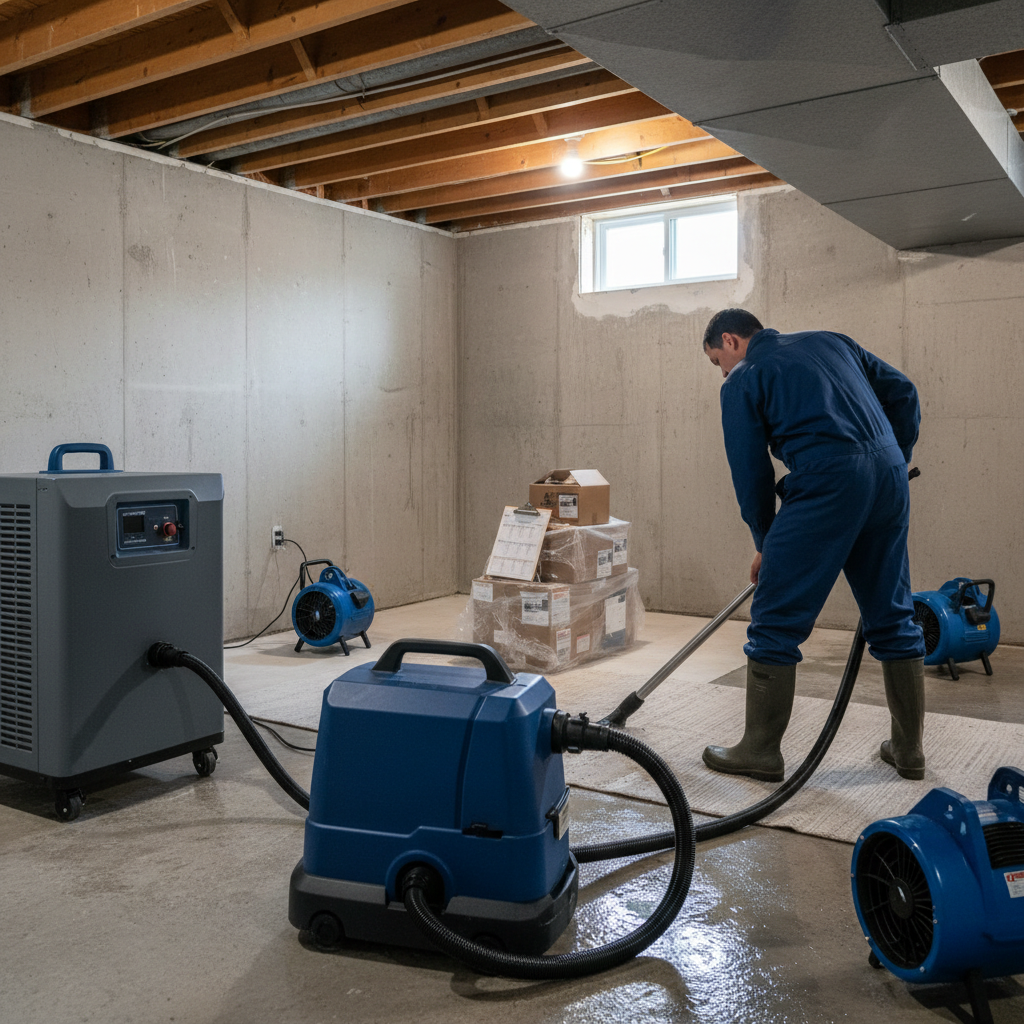
The protocol follows IICRC S500 and is the same regardless of neighborhood: on-site within 25-70 minutes depending on location, source identification and water category classification, extraction, material removal for Category 2 or 3 losses, antimicrobial treatment, structural drying with daily moisture verification, and full reconstruction. For pre-1990 Toronto homes we test for asbestos (drywall joint compound, floor tile, pipe insulation) before demolition. For condos we coordinate with building management on anything affecting common elements.
Toronto homeowners qualify for the Basement Flooding Protection Subsidy — up to $3,400 back for backwater valves, sump pumps with battery backup, and pipe severance. In the older downtown and inner neighborhoods this is especially valuable because of the combined-sewer exposure.
Serving Toronto & Surrounding Areas
Based at 85 Ellesmere Rd, Scarborough — 24/7 response across the GTA.
Water Damage Restoration Emergency in Toronto?
Available 24/7 — on-site within 45 minutes.
Other Restoration Services in Toronto
Water Damage Restoration in Other GTA Locations
FAQ
Water Damage Restoration in Toronto — FAQ
Toronto Water Damage Emergency? 24/7 Dispatch.
IICRC certified crew, direct insurance billing, full restoration scope in one call.